A century of PAX and we’d love to celebrate it with you! Discover the unique history of PAX Group. eeuw PAX, dat vieren we graag met jullie! Duik in de unieke geschiedenis van PAX Groep.
What started as a local delivery service transporting firewood and peat has grown into a company specialising in the movement of exceptionally heavy loads.
Today, transport is just one part of the bigger picture. Our services also include consolidation, packing, crane operations, shipping and on-site assembly.
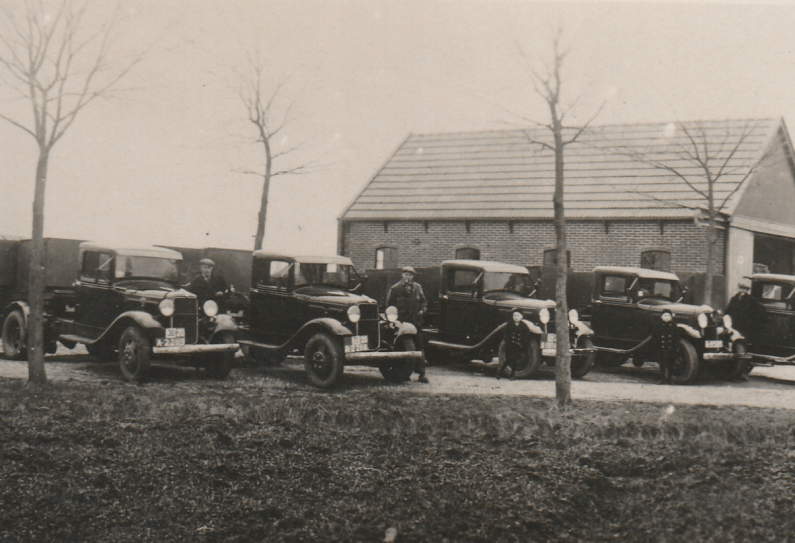
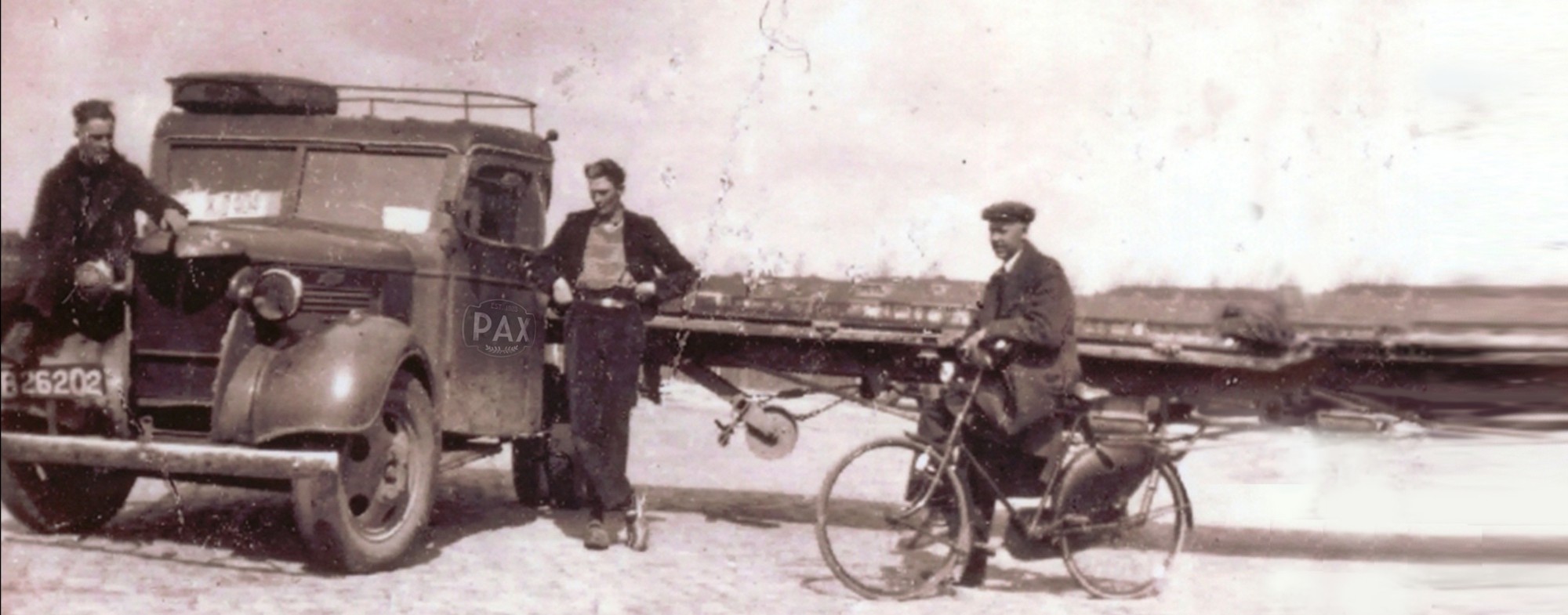
Times were tough in 1923, especially for farm labourer Pieter Plantinga. To make ends meet, he decided to try his luck in the transport business. With money borrowed from a local farmer, he managed to get his hands on an old fire engine. This Ford TT Truck was completely restored and converted into a lorry.
Pieter used it to run local delivery services between Dokkum, Kollum, Groningen and Leeuwarden. Thanks in part to the trade in firewood and peat, the number of customers continued to grow. In the early 1930s, Pieter’s brother, Jan Hendrikus Mient Plantinga, joined the business, and together they became the ‘Plantinga Brothers’. During this period, the company operated from Stroobos.
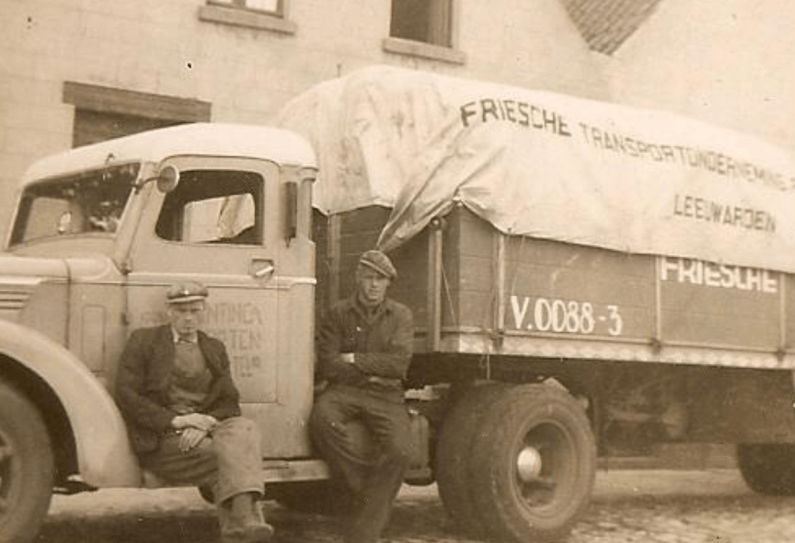
The Plantinga brothers mainly worked in earthmoving and road construction, contributing to the construction of numerous roads across the north of the Netherlands. In 1935, Pieter Plantinga joined forces with transport company Van Wieren from Kollumerpomp. This partnership resulted in a new name: V.O.F. Friesche Transportonderneming, better known as ‘FRITO’. Between 1934 and 1940, the Ford V8 was their vehicle of choice. These tractor units boasted 85 horsepower, around 50% more than previous models! In 1938, the partnership between Plantinga and Van Wieren was dissolved. Pieter once again teamed up with his brother Jan Hendrikus, continuing under the same name: Frito.
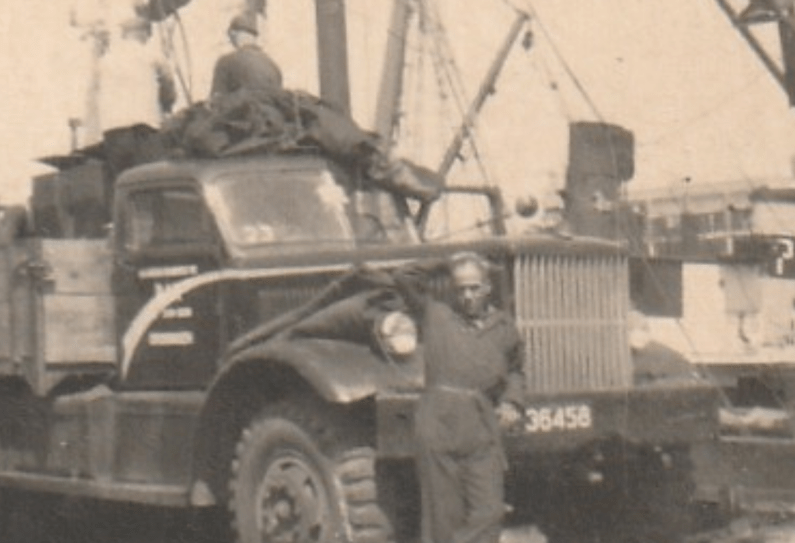
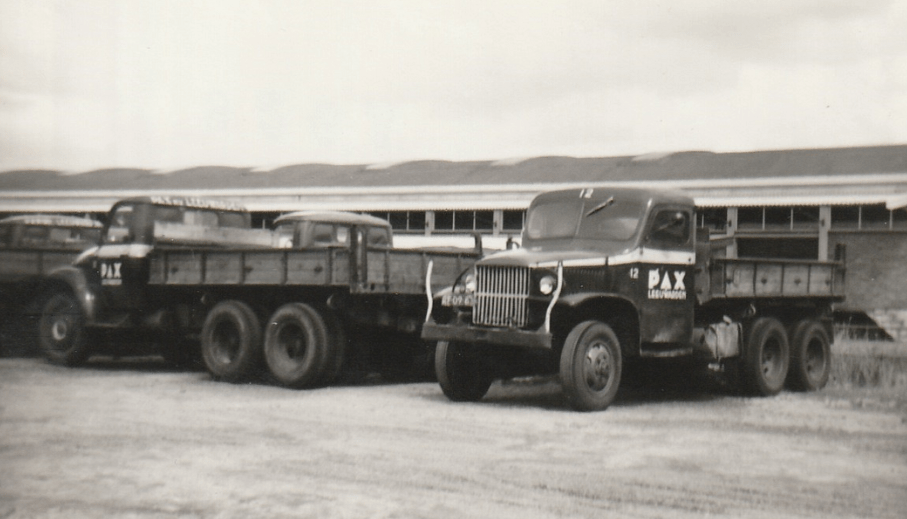
After the war, nothing remained of the fleet. All that was left was a single Ford V8, which had been dismantled and stored in parts in a shed. When liberation came in 1945, the Ford was rebuilt. It even made an appearance during the liberation celebrations, transformed into a makeshift tank with a broomstick for a gun barrel. Thanks to the Marshall Plan, Pieter Plantinga was allocated several vehicles, including Allied military trucks such as the Diamond T980 and T981. In 1947, Pieter officially changed the company name to N.V. PAX a fitting name for the post-war era. With the war behind them, PAX once again forged ahead, focusing on specialised transport.
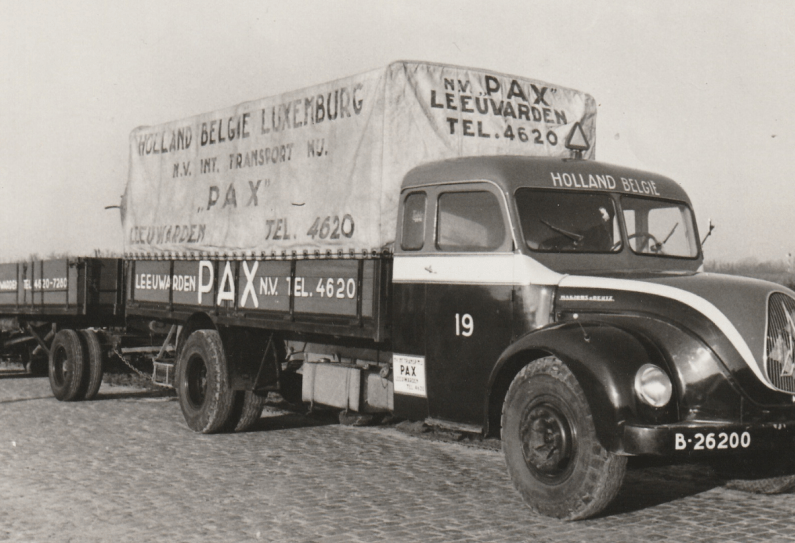
In 1952, PAX moved from Groningen to Snekertrekweg 87 in Leeuwarden. The company continued to expand its activities in international transport, earthmoving, lifting operations and specialised transport. One of PAX’s key customers at the time was Buisman, a butter merchant based on Willemskade in Leeuwarden. The relationship with Buisman was one of the reasons PAX decided to relocate from Groningen to Leeuwarden.
During the 1950s and 1960s, the PAX fleet mainly consisted of Magirus Deutz and HOGRA tractor units and tippers. Over the years, the company operated many different Magirus models, including the Magirus Deutz S3500, Magirus Pluto, Mercur, Jupiter and Saturn. These trucks were equipped with air-cooled engines, which helped keep them cool even under heavy loads.
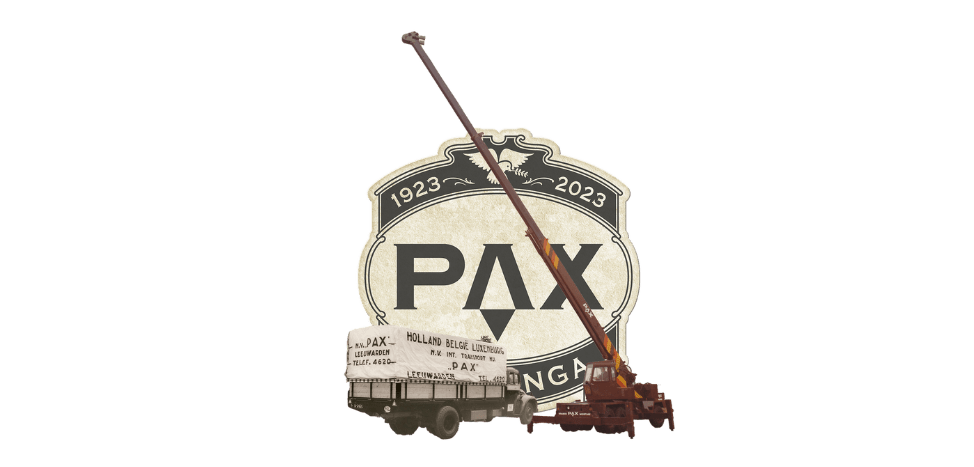
One distinctive feature of these trucks was the hand-painted ‘Holland-Belgium’ lettering. PAX had become a specialist in transport between the Netherlands and Belgium. Loads heading to Belgium often consisted of strawboard, while on the return journey, drivers transported bluestone destined for stonemasons in the Netherlands.
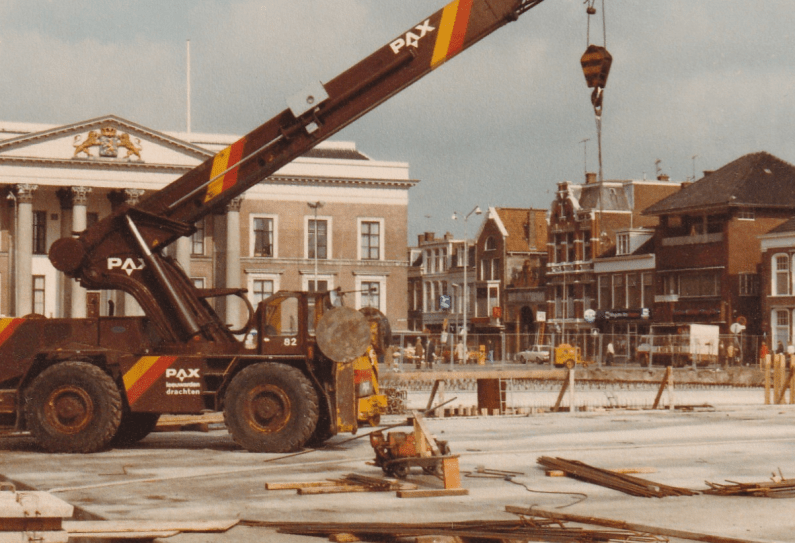
In 1965, Pieter Plantinga handed over the reins to his son, Piet. Full of ambition, Piet embraced the opportunities emerging in the logistics industry. Through good times and bad, his belief and enthusiasm never wavered and his efforts paid off. In 1970, PAX moved to Einsteinweg 4. Memorable projects during this period included lifting the Wartena Bridge using four PAX cranes in 1975, and the construction of the Zaailand underground car park on 11 November 1978.
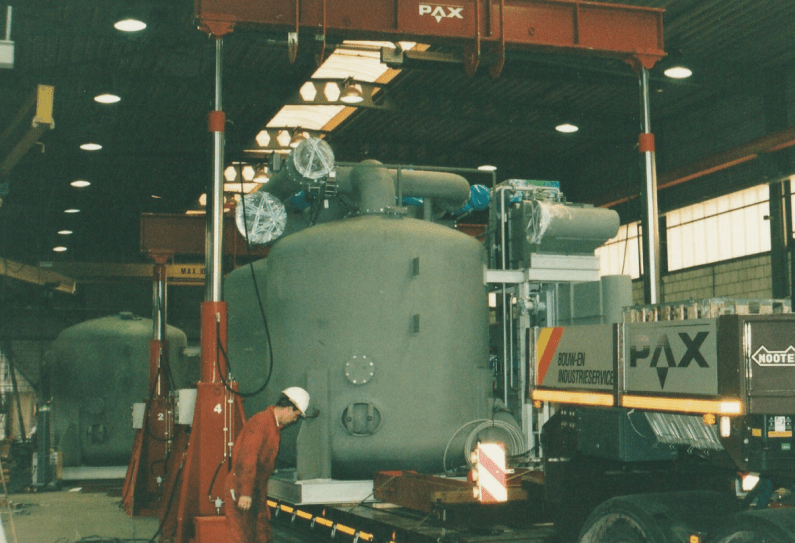
The 1980s and 1990s were marked by acquisitions and the opening of new locations, as PAX Group steadily expanded its presence across the Netherlands and Belgium. By the early 1990s, PAX Holding consisted of four operating companies, each with its own area of expertise: Zuidema Logistiek, responsible for physical distribution and warehousing in Joure, Leeuwarden and Dordrecht, and later in Gorinchem and Moerdijk; PAX Bouw- en Industrieservice, based in Leeuwarden and Geldermalsen; PAX Transport, operating from Geldermalsen and Beselare near the Belgian-French border; and De Opbouw, specialising in landscaping, site paving and earthmoving in Leeuwarden and Groningen.
PAX’s wide range of expertise was strengthened through the acquisition of several transport companies, including Zuidema Transport, Winde Transcar (food transport) and Flobbe Transport (specialised transport of boilers and tanks).
In 1999, De Opbouw was sold, allowing PAX to focus more strongly on transport and industrial relocations. That same year, Rotterdam-based NABEK Wegtransporten and its subsidiary VETRA Containervervoer joined PAX Group.
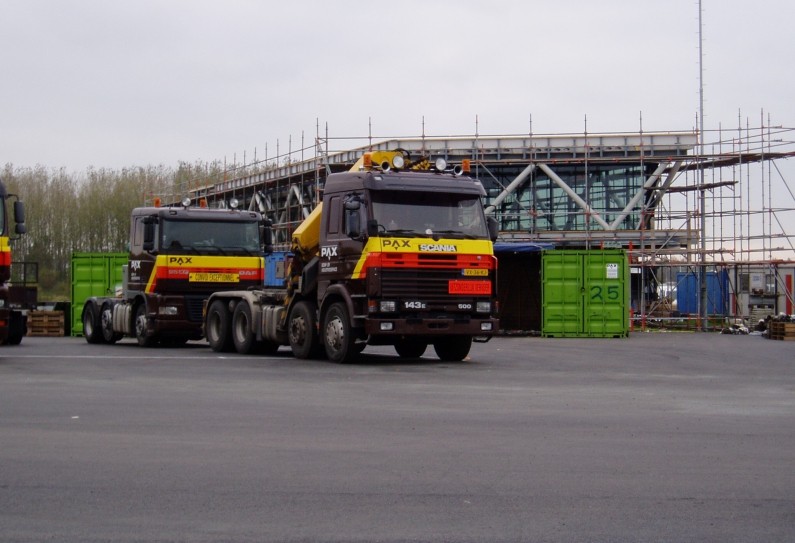
Following the construction of its new premises at Neptunus 2 in Heerenveen, the time had come for PAX to leave Leeuwarden behind. Heerenveen was chosen for its central location and easy access to the motorway. PAX Group was the very first company to set up business on the new industrial estate!
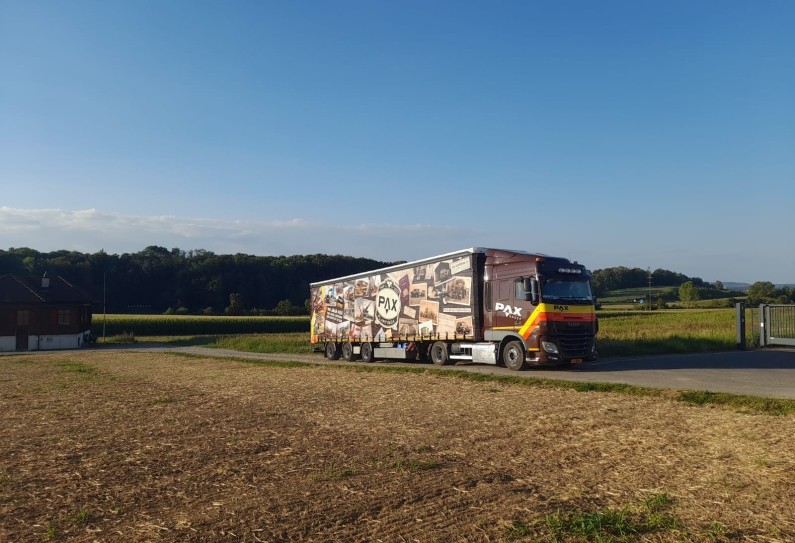
Today, in 2026, PAX Group consists of four operating companies: PAX Bouw- en Industrieservice, PAX Integrated Logistics, NABEK Wegtransporten and NABEK Noord. A century after Pieter Plantinga transported his first cow and calf, third-generation Sjoerd Plantinga is now at the helm. After nearly 100 years in logistics, PAX Group remains a true family business, one that has never lost sight of its roots.